Journey to the Cross, Part 2—Ndabenhle Ncube
Sermon summary:
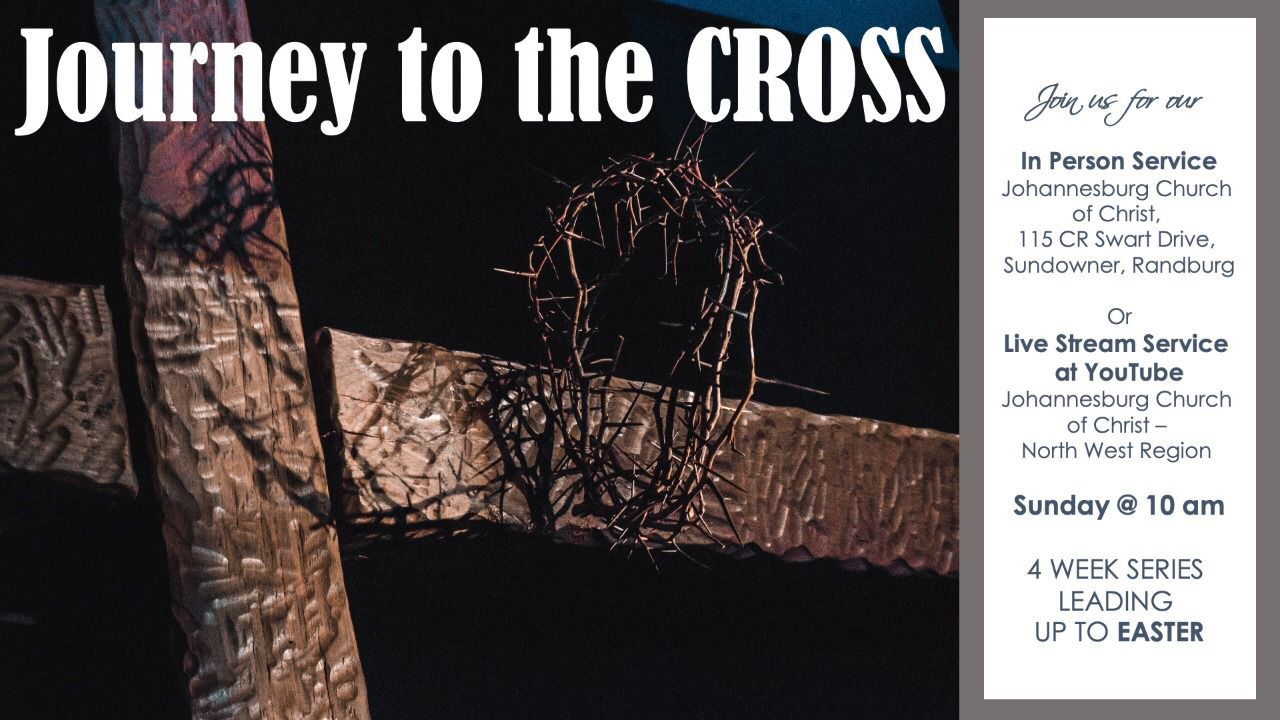
What response does the cross inspire in you? Is it a mere symbol or does it move you?
Here is a summary of Nda's sermon:
1. This is my body.
Matthew 26:26. Jesus was still concerned about his disciples. The bread symbolises our break from sin. He doesn't require anything from us because Jesus made the sacrifice on our behalf.
Psalm 51:17 God requires a broken spirit–a broken and repentant heart. What is your attitude towards sin in your life? (Remind yourself what sin does to God). God won't reject a broken & contrite heart. It's not much that God asks—to be torn/cut to the heart about sin. Are you stubborn and refuse to take it into your heart? Do you make exceptions of things you don't want to do anymore (e.g. serving, purity, etc) Here are two groups who want the same thing–go to heaven–but only those on the narrow road will make it.
Luke 13:24 Are you making every effort to enter through the narrow gate or are you merely trying?
Matthew 21:44 If you are stubborn, the kingdom will be taken away from you. Forget your pride and submit to Jesus. The stone will fall on you.
What is your attitude in following God's plan for your life?
2. This is my blood.
Matthew 26:27–30. On Jesus' blood rested the fate of humanity. We have access to his blood. We live in a society of justice rather than Grace. We deserve the lashings and pain but Jesus took the punishment on our behalf. Grace is like a present under the Christmas tree with your name on it. It's not yours until you open and access the gift ( repent and be baptised because it's at baptism that we access God's grace).
3. When I am weak.
Matthew 26:31–35 Falling away from God is a gradual thing because of the choices you make. Sometimes you realise too late that you've drifted away. Satan's plan is for you to slumber–you lose your fire and feel lonely; you compromise; you don't see the sin that's taking hold of your heart. We need to keep on fighting. In what areas in your life are you drifting? What are you focusing on that keeps you from God; what's taking up your time?
All of us will be weak at one stage; how do you handle those moments?
Don't buy into the lie that if you take time off from God you will come back stronger. Don't put it off (e.g. you'll be urgent to get help if you broke your leg, wouldn't you?). Don't blame others for your own spiritual weakness. Don't leave God on account of someone else.
Talk to someone about how you feel; go back to the scriptures. Peter said he'd never fall away, but when things got difficult, he did. Peter repented and came back.
There is a reward for finishing the race.
Watch the full service and sermon
here.